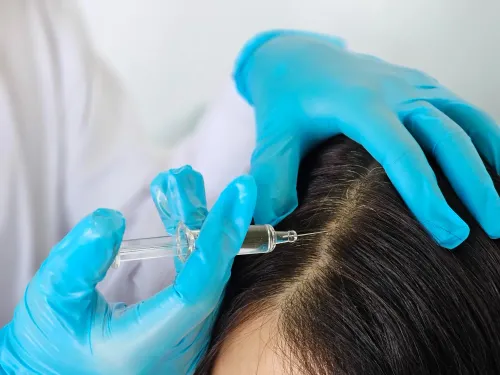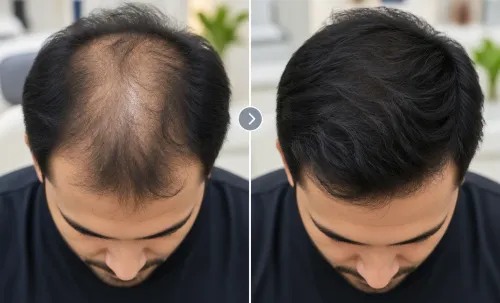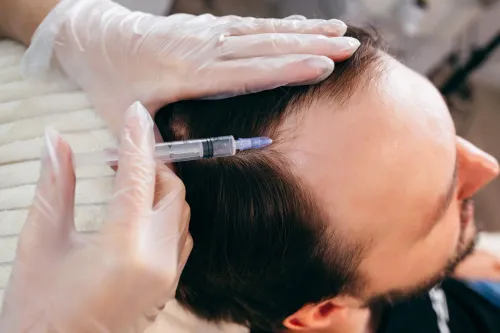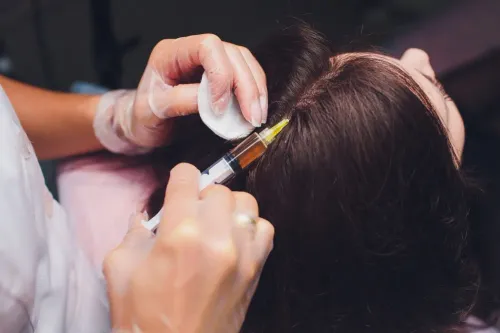
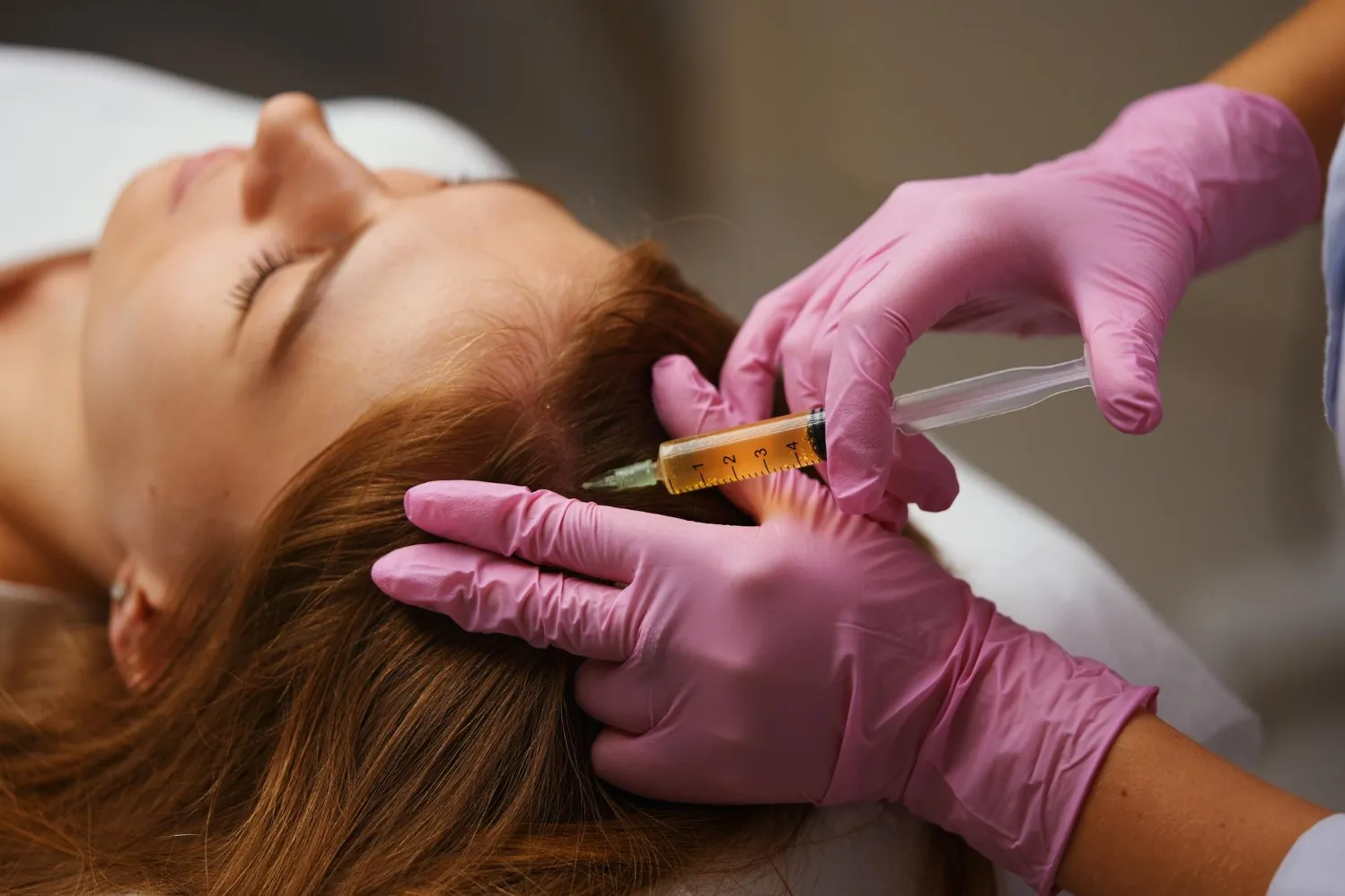
When hair begins losing density, many people start comparing non-surgical treatments before considering transplantation. GFC therapy is one of the options that may appear during this search, particularly for people dealing with thinning hair while follicles are still present.
For patients in Nashik, Maharashtra, understanding what GFC involves and how it differs from other approaches can make treatment discussions more productive.
What GFC Therapy Involves
GFC commonly refers to Growth Factor Concentrate. The approach uses a processed preparation derived from the patient's blood and is designed to concentrate selected growth factors for application as part of a hair treatment protocol.
Because it uses blood-derived components, it is often discussed alongside PRP. However, preparation protocols and the final material used are not necessarily identical.
Patients should ask the provider to explain exactly what procedure is being offered rather than assuming all blood-based treatments are the same.
When It May Enter the Discussion
GFC therapy is generally considered in the context of non-surgical hair management.
It may be discussed when there is thinning rather than complete loss of follicles. The patient's diagnosis, degree of miniaturisation, progression of hair loss, age, and other treatment factors need to be evaluated.
The presence of scalp visibility does not by itself establish whether GFC is appropriate.
GFC and PRP Have Different Preparation Approaches
PRP uses platelet-rich plasma prepared from the patient's blood. GFC involves a processing approach intended to obtain a concentrate of selected growth factors.
For patients, the important point is not which abbreviation sounds more advanced.
Instead, ask:
- Why has this treatment been recommended?
- What hair-loss condition is being treated?
- How is the preparation performed?
- How many sessions are being considered?
- How will progress be measured?
- What other treatments may still be required?
This helps compare options based on clinical reasoning rather than terminology.
Look at the Whole Hair Loss Picture
Non-surgical hair treatment rarely exists in isolation.
If a patient has progressive pattern hair loss, the management plan may need to account for continued thinning over time. If shedding has another cause, that issue may need attention first.
Factors that can influence the treatment strategy include family history, scalp health, hair calibre, age, medications, nutritional status, and previous treatment response.
Dr. Vinay Chouksey at Jata Hair Sciences evaluates hair-loss patterns when discussing restoration options.
Track Progress Properly
Hair changes slowly. Checking density every few days can create confusion because lighting, hairstyle, hair length, and wetness can dramatically alter how much scalp is visible.
Standardised photographs are more useful.
Pictures should ideally be taken from consistent angles with similar lighting and hair positioning. Comparing images over a meaningful interval can provide a clearer picture of whether density and shedding are changing.
Know When Reassessment Is Needed
If shedding continues to increase, bald areas expand, scalp symptoms develop, or the treatment response differs from expectations, reassessment may be necessary.
A treatment plan should be capable of changing when the clinical picture changes.
For people considering GFC therapy in Nashik, the useful question is not simply whether the procedure can be performed. It is whether it fits the diagnosed type and stage of hair loss.
Understanding the preparation, purpose, expected treatment course, alternatives, and method of monitoring makes it easier to evaluate GFC as part of a broader hair restoration strategy rather than viewing it as a standalone answer to every form of hair loss.
Keywords