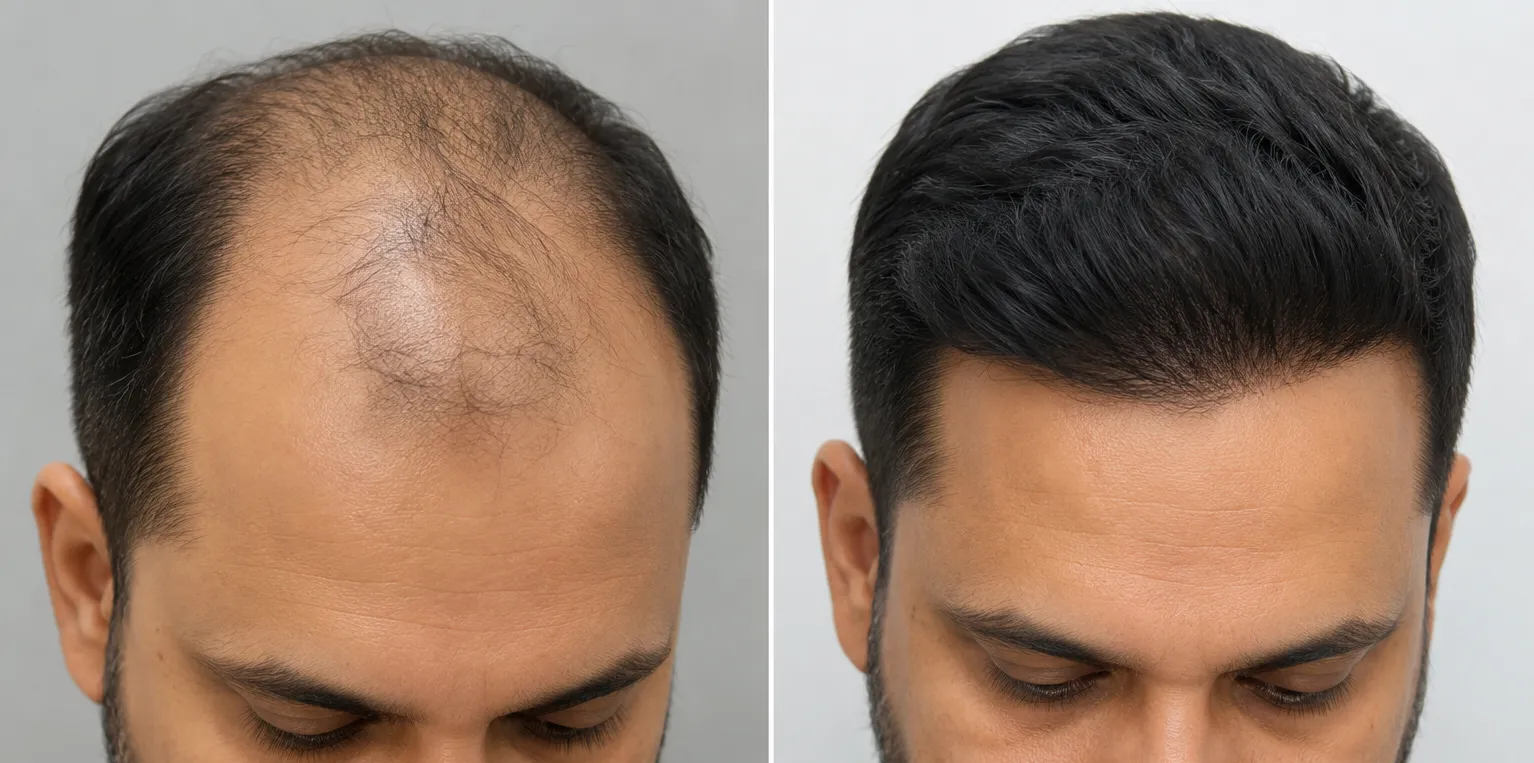
A natural-looking hairline is one of the most important goals for people considering an FUE hair transplant. The frontal hairline frames the face, influences perceived age, and remains highly visible in everyday interactions.
Creating it successfully requires more than placing a large number of grafts.
At Jata Hair Sciences, Dr. Vinay Chouksey evaluates facial proportions, donor hair, existing recession, hair characteristics, age, and future hair-loss risk before designing a transplant plan.
What Is FUE Hair Transplantation
FUE involves extracting individual follicular units from a suitable donor region.
These grafts are prepared and placed into recipient sites created within areas requiring restoration.
Unlike strip-based harvesting techniques, FUE removes individual follicular units rather than one continuous strip of scalp.
The procedure still requires careful surgical planning and donor management.
What Makes a Hairline Look Natural
Natural hairlines are rarely perfectly straight.
They typically contain subtle irregularities, softer single-hair follicles near the front, and progressively greater density behind the leading edge.
Important planning factors include:
- Hairline height
- Frontal shape
- Temporal recession
- Facial width
- Hair calibre
- Existing native hair
- Donor capacity
A design should look suitable both immediately and years later.
Why Maximum Grafts Are Not Always Better
Patients sometimes associate more grafts with a better transplant.
The relationship is not that simple.
Donor hair is finite. Using more grafts than necessary in one area can reduce the supply available for future restoration if hair loss progresses.
The goal should be efficient graft use and appropriate visual density rather than chasing the highest number.
Check Who Is Responsible for Planning
Before undergoing FUE, patients should understand who is making important decisions during the procedure.
Ask who will:
- Assess the donor area
- Design the hairline
- Decide the extraction pattern
- Create recipient sites
- Supervise graft handling
- Monitor postoperative recovery
Understanding these responsibilities makes provider comparison easier.
Recovery Needs Patience
After FUE, temporary crusting and redness can occur around treated areas.
The transplanted hair shafts commonly shed during the early period. New growth then begins gradually according to the follicles' growth cycles.
Patients should receive proper instructions regarding washing, physical activity, hair care, and follow-up.
The procedure should therefore be viewed as a months-long restoration process rather than a one-day cosmetic transformation.
Choosing FUE Hair Transplant Care
People considering an FUE hair transplant in Mumbai have many provider options, making quality of evaluation especially important.
At Jata Hair Sciences, Dr. Vinay Chouksey approaches hairline transplantation by considering both present appearance and possible future progression.
A thorough consultation should clarify:
- Whether FUE is suitable
- How many grafts may be required
- Where donor follicles will be taken
- How the hairline will be positioned
- What density can realistically be achieved
- How donor hair will be preserved
- What recovery involves
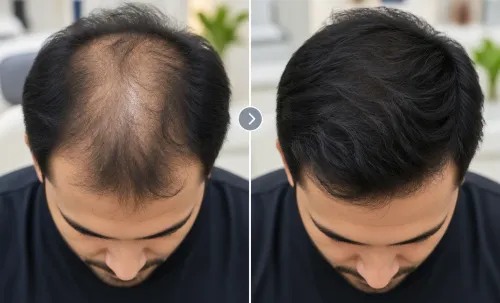
A natural hair transplant is ultimately not defined by how dramatic it looks immediately after surgery. It is defined by whether the hairline, density, direction, and donor management continue to look appropriate as the transplanted hair grows and the patient ages.
Keywords