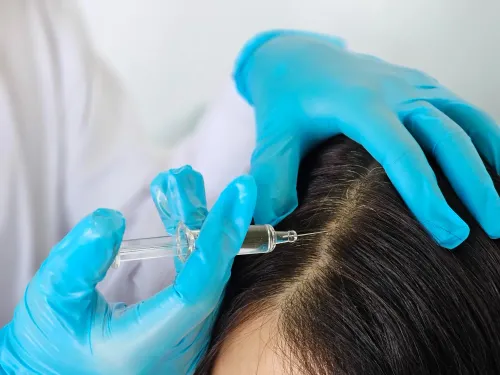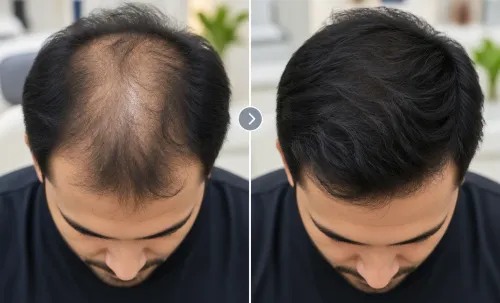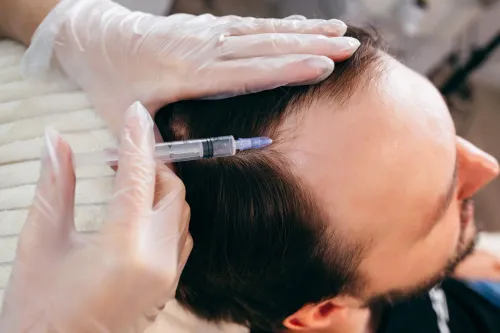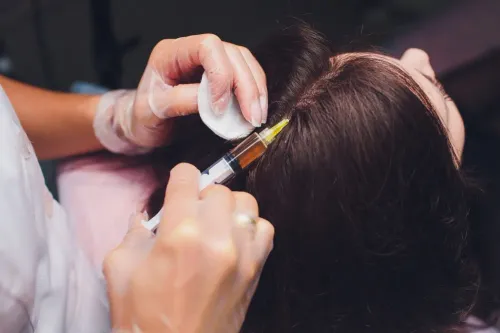
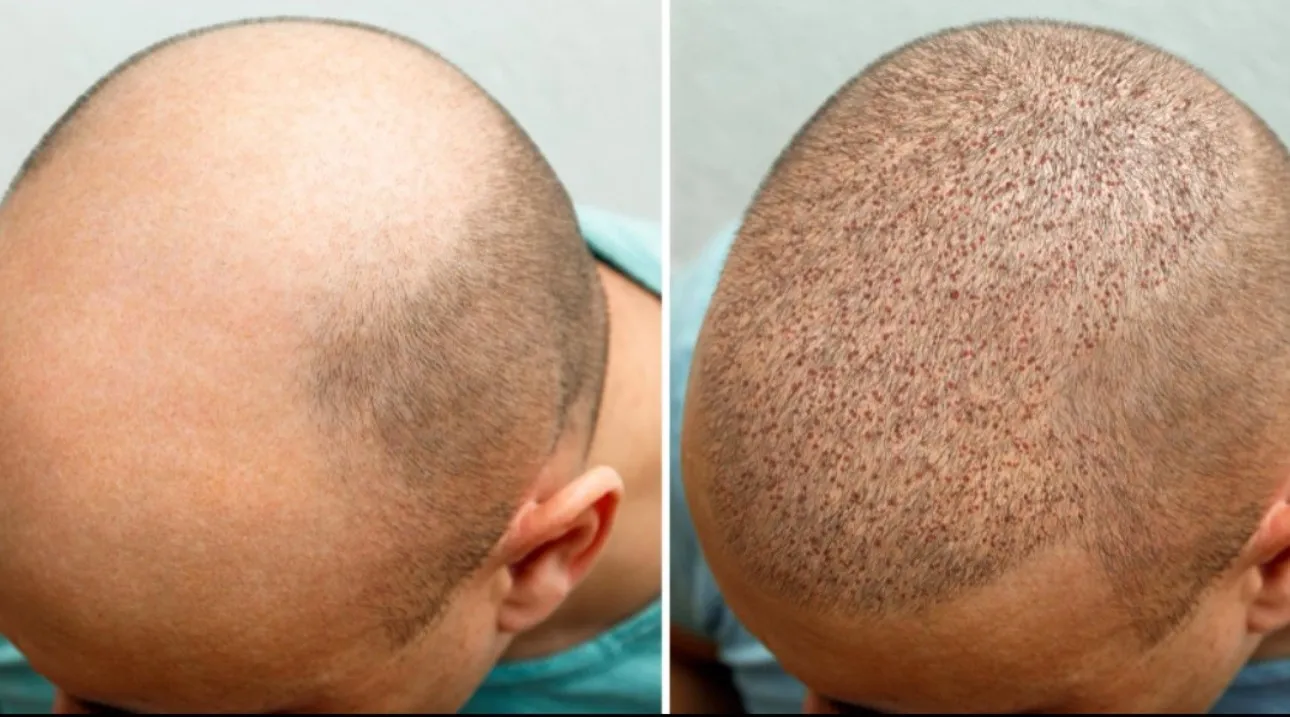
When hair loss progresses beyond mild thinning, many people begin considering a hair transplant as a way to restore coverage in areas where natural density has significantly reduced.
Unlike treatments intended to support existing follicles, hair transplantation involves relocating suitable follicles from a donor region to selected areas of the scalp.
At Jata Hair Sciences, Dr. Vinay Chouksey evaluates donor availability, the extent of baldness, existing native hair, facial proportions, and possible future progression before planning transplantation.
When Does Hair Transplantation Become Relevant
Not every person experiencing hair loss immediately requires surgery.
Hair transplantation is generally considered when there is a meaningful loss of coverage and sufficient donor hair is available to create a worthwhile improvement.
Common concerns include:
- Receding frontal hairline
- Deep temporal recession
- Significant frontal thinning
- Crown baldness
- Combined frontal and crown loss
- Previous unsuccessful restoration
- Selected stable scar areas
The size and location of the bald region influence how donor follicles need to be distributed.
Understanding the Donor Area
The donor area is one of the most important factors in transplantation.
Hair follicles are commonly harvested from regions that are relatively resistant to patterned hair loss.
However, donor supply is finite.
A surgeon must consider:
- Donor density
- Hair thickness
- Follicular unit quality
- Scalp characteristics
- Size of the recipient area
- Potential future procedures
Using too many grafts unnecessarily can affect future options.
Hairline Design Requires Long-Term Thinking
Patients sometimes request the lowest possible hairline.
A youthful-looking hairline may sound appealing, but the design needs to remain appropriate as the person ages.
An excessively low design also consumes more grafts.
Natural hairline planning considers facial proportions, age, existing hair, donor capacity, and expected future loss.
Small irregularities and gradual density transitions can also contribute to a more natural appearance.
What Happens During the Growth Period
Hair transplant results do not appear immediately.
The scalp goes through an initial healing phase after the procedure. Many transplanted hairs then shed before new growth starts.
Visible improvement develops progressively over the following months.
Hair growth rates differ between individuals, and final density should not be judged during the early stages.
Know What a Transplant Cannot Guarantee
A transplant redistributes follicles. It does not create an unlimited supply of new hair.
Final coverage depends on:
- Available donor grafts
- Hair thickness
- Hair texture
- Size of the bald region
- Contrast between scalp and hair
- Graft survival
- Existing native hair
Advanced hair loss may therefore require careful prioritisation of the most visually important areas.
Hair Transplant Treatment
Patients exploring a hair transplant in Nashik should avoid choosing a provider based only on an advertised graft number or low package price.
At Jata Hair Sciences, Dr. Vinay Chouksey evaluates the long-term hair-loss pattern and donor area before planning the procedure.
A good consultation should explain where grafts will be placed, why a certain number is suggested, how the donor area will be protected, what density is realistic, and whether future hair loss may require additional planning.
Hair transplantation can provide meaningful restoration for suitable candidates, but the quality of planning is just as important as the procedure itself.
Keywords