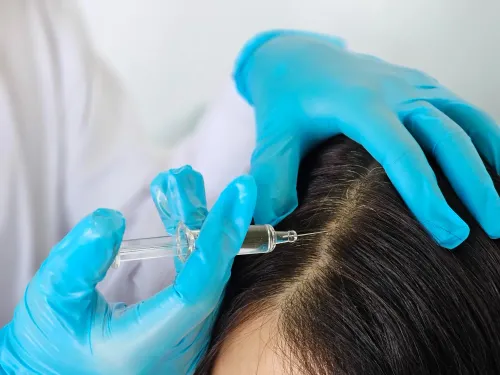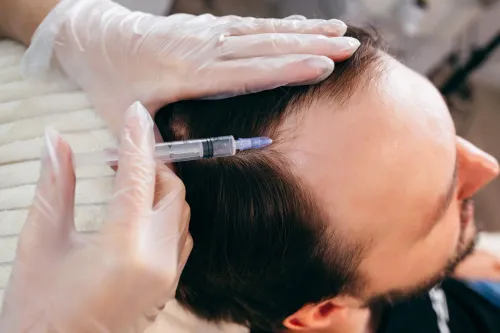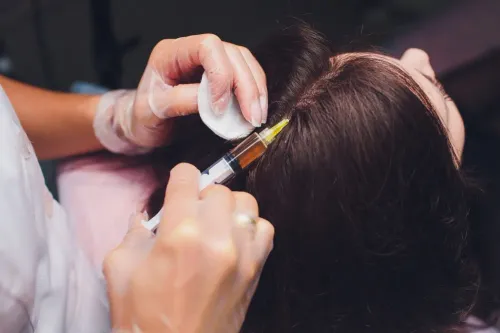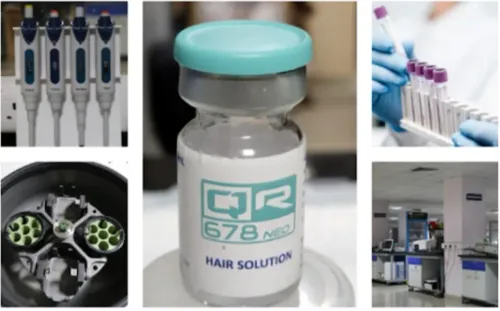
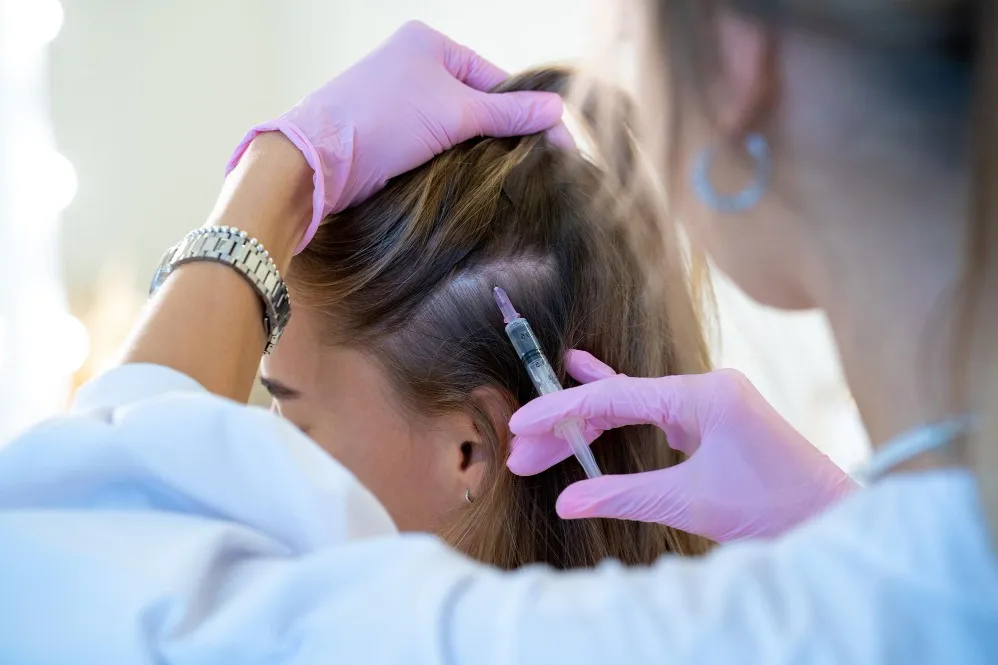
Regenerative treatments have become increasingly visible in modern hair restoration. Among these, exosomes therapy for hair has generated interest among people seeking non-surgical approaches for thinning hair and reduced density.
Exosomes are involved in cell-to-cell communication and are being studied in several areas of regenerative medicine. Their use in hair-related treatments has also attracted attention, although patients should understand that products, protocols, and supporting evidence can differ.
At Jata Hair Sciences, Dr. Vinay Chouksey evaluates the condition of existing hair follicles before considering regenerative treatment options.
What Are Exosomes
Exosomes are microscopic extracellular vesicles released by cells.
They contain biological signalling molecules and participate in communication between cells.
In hair restoration, exosome-based preparations are discussed for their potential role in supporting the environment surrounding existing follicles.
The important word is existing.
Regenerative treatments should not automatically be assumed to recreate follicles in areas where substantial permanent follicular loss has already occurred.
Why Treatment Quality Matters
Not every product described as exosome therapy is identical.
Patients should understand:
- The source of the preparation
- How the product is processed
- How it is stored
- What protocol is being used
- Why it is being recommended
- What evidence supports the proposed treatment
Choosing treatment based only on the word exosome can therefore be misleading.
Hair Density Needs Proper Assessment
Visible thinning can occur for different reasons.
A doctor may need to examine whether the issue involves:
- Progressive follicular miniaturisation
- Diffuse shedding
- Reduced shaft thickness
- Scalp disease
- Previous hair loss
- Advanced follicular loss
The treatment recommendation should depend on these findings.
A person with early thinning may have a different opportunity for non-surgical management than someone with an extensive bald area.
What Results Should Patients Expect
Patients should avoid promises of guaranteed regrowth.
Hair restoration outcomes depend on several factors, including:
- Hair-loss diagnosis
- Existing follicle condition
- Severity of thinning
- Patient age
- Treatment consistency
- Individual biological response
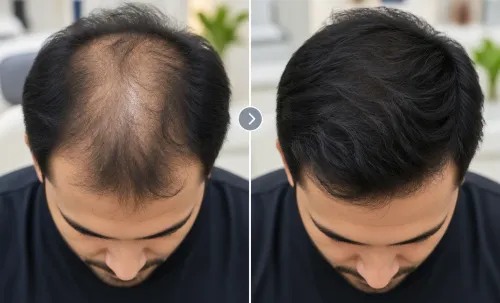
Changes in hair density also take time to evaluate because hair grows through biological cycles.
Standardised photographs can help document progress objectively.
Important Questions Before Treatment
Before proceeding with exosome therapy, patients can ask:
- Why has this treatment been recommended?
- What product will be used?
- What does the current evidence suggest?
- What limitations should I understand?
- What risks should be discussed?
- How many sessions are planned?
- When will progress be evaluated?
- Are other treatments needed?
A clear discussion helps prevent unrealistic expectations.
Exosomes Therapy for Hair
Demand for advanced aesthetic treatments has made exosomes therapy for hair in Mumbai increasingly visible.
However, availability should not be confused with suitability.
At Jata Hair Sciences, Dr. Vinay Chouksey assesses the pattern of thinning, existing hair density, scalp condition, and previous treatment before building a restoration strategy.
Patients should understand where exosome treatment fits within the larger plan.
For some, the discussion may centre on maintaining and supporting existing hair. For others, medical management or hair transplantation may deserve consideration.
Regenerative treatments are most useful when selected for the right reason. A thoughtful consultation should therefore focus less on how new a treatment sounds and more on whether it addresses the individual's actual hair-loss problem.
Keywords