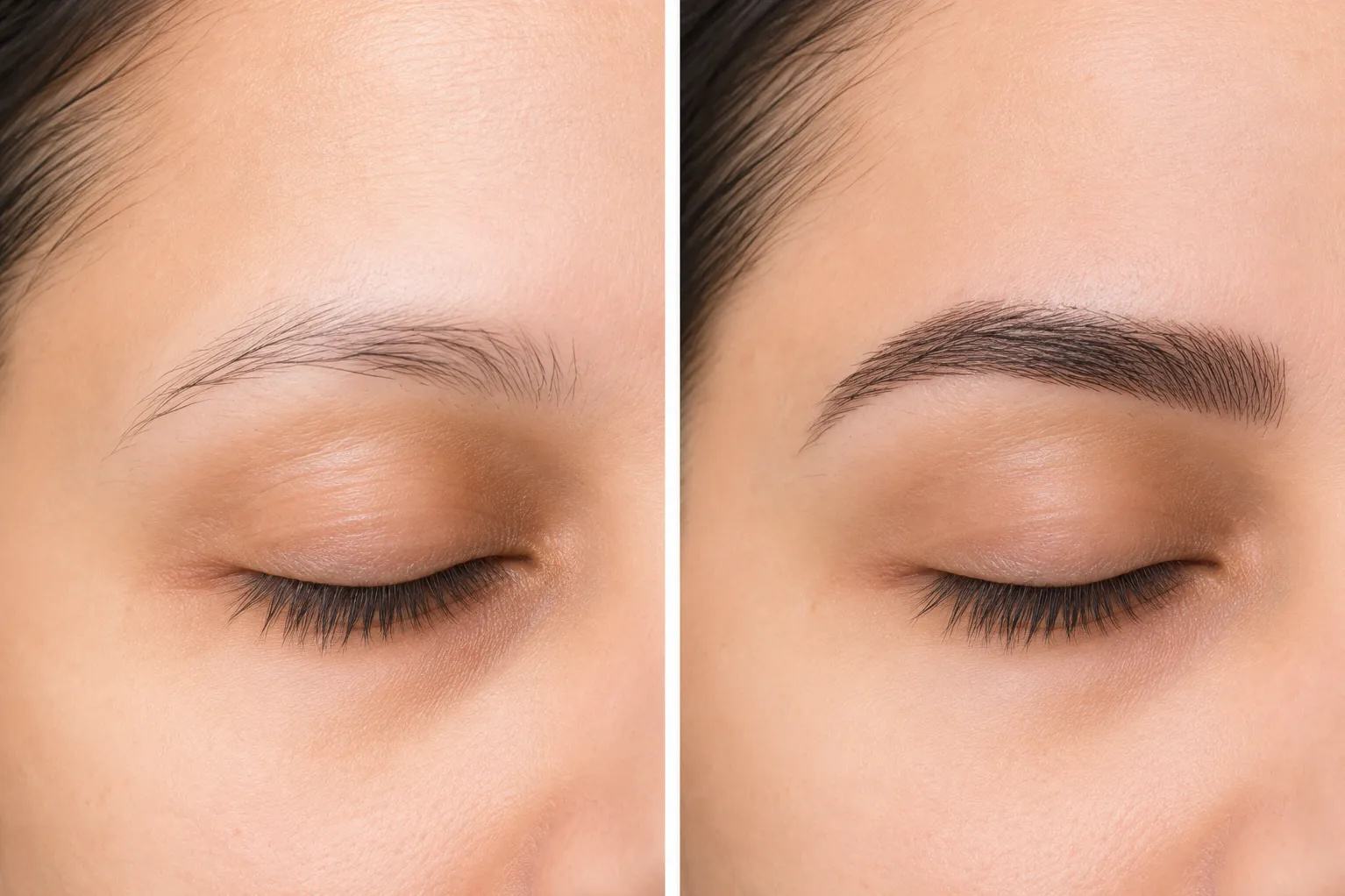
Thin, uneven, or partially missing eyebrows can affect facial balance more than many people realise. While eyebrow pencils, microblading, and cosmetic products can improve appearance temporarily, they do not create naturally growing eyebrow hair. For people with permanent eyebrow thinning, an eyebrow transplant may provide a longer-term hair restoration option.
At Jata Hair Sciences, Dr. Vinay Chouksey evaluates eyebrow density, facial proportions, donor hair availability, and the reason behind eyebrow loss before planning treatment. This individual assessment is especially important because natural-looking eyebrow restoration depends heavily on shape, direction, and careful graft placement.
Why Do Eyebrows Become Thin
There is no single reason for eyebrow thinning. Some people naturally have low eyebrow density, while others gradually lose hair due to repeated plucking, ageing, previous injuries, scars, or certain underlying conditions.
Before considering transplantation, it is important to determine whether the eyebrow loss is stable. Sudden or unexplained eyebrow loss may need further evaluation before a cosmetic restoration procedure is planned.
How an Eyebrow Transplant Works
An eyebrow transplant involves taking suitable hair follicles from a donor area and placing them into sparse areas of the eyebrows.
The procedure generally involves:
- Assessing the existing eyebrow pattern
- Designing a shape suited to facial proportions
- Selecting suitable donor follicles
- Extracting individual hair grafts
- Creating recipient sites
- Implanting follicles at carefully planned angles
The angle of implantation is one of the most important parts of the procedure. Eyebrow hairs normally grow close to the surface of the skin and change direction from the inner eyebrow to the outer tail.
Simply placing more follicles does not automatically create a natural result. Their direction, spacing, and distribution matter just as much as the number of grafts.
Who May Consider Eyebrow Restoration
An eyebrow transplant may be considered by individuals with:
- Naturally sparse eyebrows
- Permanent gaps within the brows
- Uneven eyebrow density
- Hair loss following stable scars
- Long-term thinning caused by excessive plucking
- A desire to improve eyebrow shape using natural hair
Suitability still depends on donor availability, scalp and skin condition, medical history, and expectations.
What Happens After the Procedure
The implanted area needs time to heal. Mild redness or crusting may occur initially, depending on the individual procedure and skin response.
Some transplanted hairs can shed during the early weeks. This does not necessarily mean that the follicles have been lost. New hair growth develops gradually as transplanted follicles move through their natural growth cycle.
Because donor hair commonly comes from the scalp, transplanted eyebrow hairs may continue growing longer than natural eyebrow hair. Regular trimming and grooming can therefore become part of routine maintenance.
Eyebrow Transplant Planning
People considering an eyebrow transplant in Mumbai should look beyond a standard eyebrow shape or a fixed graft package.
Mumbai patients often have access to multiple aesthetic treatment options, making careful evaluation important. A good consultation should focus on why the eyebrows are sparse, whether transplantation is appropriate, what eyebrow shape complements the face, and what density can realistically be created.
At Jata Hair Sciences, Dr. Vinay Chouksey plans eyebrow restoration according to individual facial characteristics instead of following the same design for every patient.
Natural-looking eyebrow restoration is ultimately about precision. Appropriate follicle selection, realistic density, careful direction, and balanced design can make a significant difference to the final appearance.
Keywords