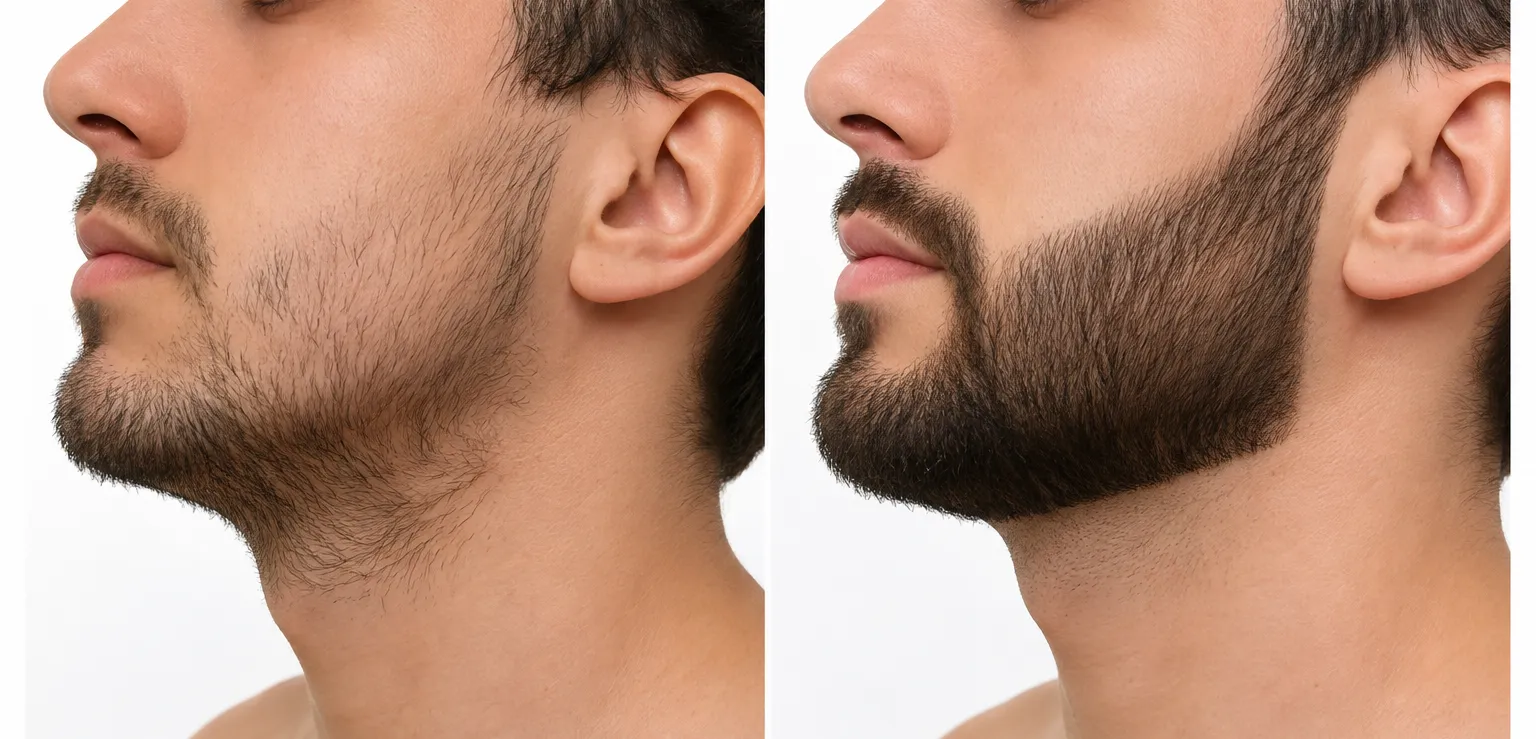
Facial hair density varies widely between individuals. Some men naturally develop a full beard, while others have persistent gaps, limited cheek coverage, an uneven moustache connection, or sparse growth in particular areas.
When facial hair distribution is naturally limited or permanently reduced, a Beard Hair Transplant may be considered to improve coverage using transplanted follicles.
For men in Mumbai, Maharashtra, the procedure requires careful planning because facial hair has distinctive angles, density patterns, and transitions that need to be respected.
Common Reasons Men Consider Beard Restoration
Genetics is one of the most common reasons for limited beard density. In other cases, facial hair may be reduced following an injury, scar, previous procedure, or stable localised hair loss.
People may seek transplantation to address:
- Patchy cheek growth
- Sparse sideburns
- Gaps within an existing beard
- Limited moustache density
- Poor moustache-to-beard connection
- Selected stable scars
- Naturally low facial hair density
Before treatment, the cause of patchiness needs to be understood. If facial hair is actively being lost, evaluation may be necessary before surgical restoration.
How Beard Transplantation Is Planned
Suitable follicles are harvested from a donor region and implanted into planned facial areas.
The key challenge is not simply obtaining more hairs. Beard follicles grow at different angles depending on their position on the face.
Hair around the sideburns, jawline, cheeks, moustache, and chin can follow different directional patterns. Implanting grafts without accounting for these variations may create an unnatural appearance.
Density should also blend gradually with existing facial hair.
Facial Structure Influences Beard Design
A beard pattern that suits one person may not complement another.
Planning can take into account jaw shape, cheek structure, moustache growth, existing beard boundaries, and the amount of donor hair available.
Patients should discuss the desired shape before the procedure rather than relying on a generic beard template.
Photographs showing the person's preferred beard style can help communicate expectations, although the achievable coverage still depends on donor resources and facial characteristics.
What Patients Should Know About Donor Hair
The follicles used for beard transplantation are typically selected from an appropriate scalp donor area.
Because transplanted follicles retain characteristics of their donor source, texture and growth behaviour may not initially match every aspect of naturally occurring beard hair.
Selection and placement therefore matter when attempting to create a blended appearance.
Recovery and Growth Take Time
Following the procedure, temporary redness, small crusts, and mild swelling can occur. The treated area should be handled according to the aftercare instructions provided by the surgical team.
Initial transplanted hairs may shed as the follicles move through their normal cycle. New growth develops progressively in the following months.
Patients should therefore evaluate progress over the expected growth period rather than expecting immediate final density.
Questions to Ask Before Treatment
A consultation should clarify:
- Whether the patchiness is suitable for transplantation
- Which donor area will be used
- How the beard shape will be planned
- How natural hair angles will be recreated
- What density is realistically achievable
- What early aftercare involves
- How transplanted hair should be groomed later
Dr. Vinay Chouksey at Jata Hair Sciences works with beard restoration as part of hair transplantation services.
A Beard Hair Transplant in Mumbai can be worth evaluating when sparse facial hair is stable and sufficient donor follicles are available. The most useful goal is not maximum graft placement but a carefully planned distribution that complements existing facial hair, facial proportions, and the individual's preferred beard style.
Keywords