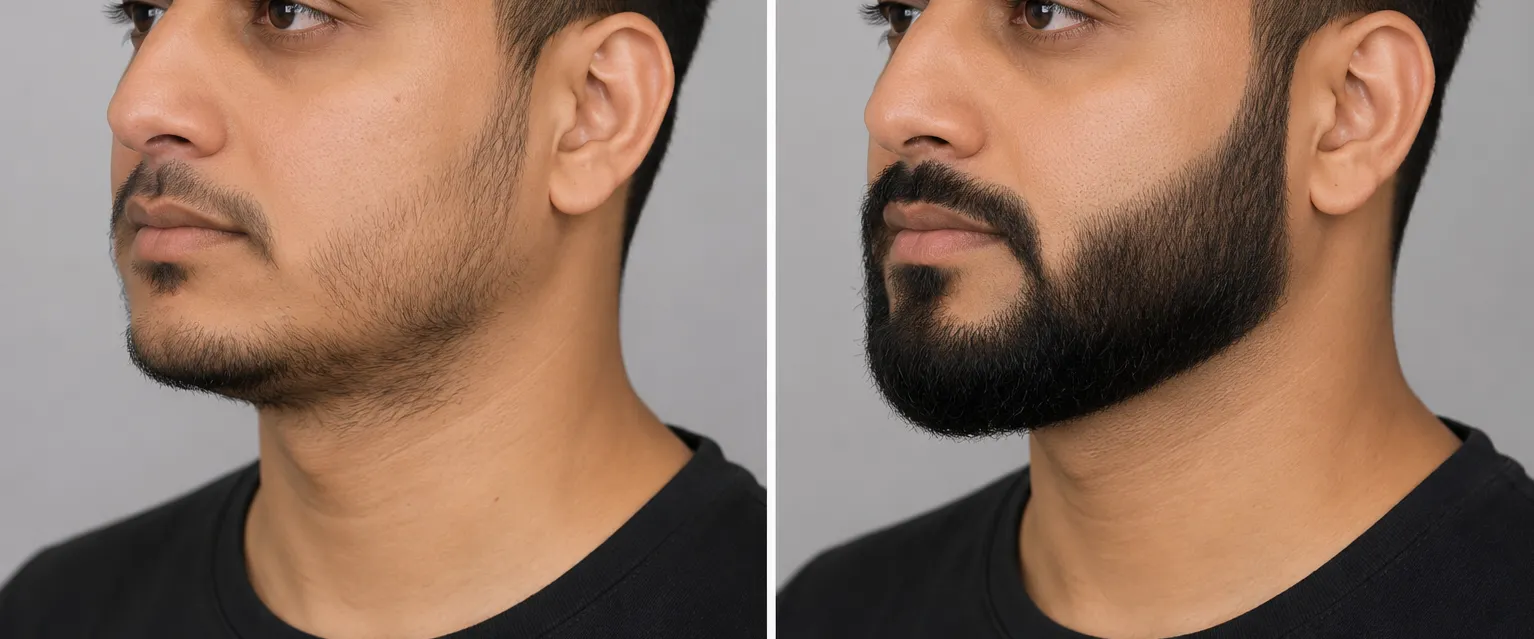
A full beard is largely influenced by genetics. Some men naturally develop dense facial hair, while others experience patchy cheeks, thin sideburns, gaps around the moustache, or limited growth along the jawline.
When these areas remain sparse despite normal beard development, cosmetic products cannot create new follicles. A beard transplant may be considered by suitable candidates who want to improve permanent facial hair coverage.
At Jata Hair Sciences, Dr. Vinay Chouksey evaluates existing beard growth, donor hair quality, facial structure, skin condition, and the patient's preferred beard style before recommending transplantation.
Why Some Beards Grow Unevenly
Beard density differs significantly between individuals.
Genetics is one of the strongest factors influencing where facial hair grows and how dense it becomes. Other reasons for visible gaps may include scars, previous injuries, or certain conditions affecting hair growth.
Before planning a transplant, the reason for limited beard density should be understood.
How Beard Transplantation Is Planned
During beard transplantation, suitable follicles are taken from a donor region and placed into areas where greater facial hair coverage is desired.
Depending on the concern, treatment may focus on:
- Cheek density
- Sideburns
- Jawline coverage
- Chin hair
- Moustache gaps
- Goatee definition
- Selected stable scar areas
The beard design needs to complement the person's face rather than simply maximise the number of transplanted follicles.
Why Hair Direction Matters
Beard hairs grow differently across various parts of the face.
Cheek hair usually follows a different direction from moustache hair. Follicles around the jawline and chin may also grow at different angles.
Recipient sites therefore need to be created with careful attention to the natural direction of existing facial hair.
Incorrectly angled grafts can remain noticeable even when the follicles grow successfully. This is why beard transplantation combines technical hair restoration with aesthetic planning.
Understanding Donor Hair
A beard transplant depends on suitable donor follicles.
The doctor considers factors such as:
- Donor density
- Hair thickness
- Follicle characteristics
- Number of grafts required
- Size of the recipient area
Donor hair is limited, so planning should balance the desired beard coverage with long-term preservation of the donor region.
Patients seeking extremely dense facial hair may need to understand what can realistically be achieved with their available follicles.
What Recovery May Look Like
Small crusts and temporary redness can develop around transplanted follicles during the initial healing period.
Patients usually receive guidance on facial washing, shaving, physical activity, and care of the transplanted region.
Early transplanted hairs may shed before new growth begins. Beard restoration therefore develops progressively rather than producing the final appearance immediately after transplantation.
Beard Transplant Treatment
Men researching a beard transplant in Nashik should use their consultation to discuss much more than the number of grafts.
Important questions include how the beard pattern will be designed, where donor follicles will come from, how graft direction will be managed, what density is realistic, and what recovery involves.
At Jata Hair Sciences, Dr. Vinay Chouksey assesses these factors before creating an individual beard restoration plan.
A successful beard design should look appropriate even when facial hair is kept short. Natural distribution, gradual transitions, suitable angles, and realistic density are therefore more valuable than simply aiming for maximum graft numbers.
For men with permanent patchiness who have suitable donor hair, beard transplantation can be explored as a structured facial hair restoration procedure after proper evaluation.
Keywords