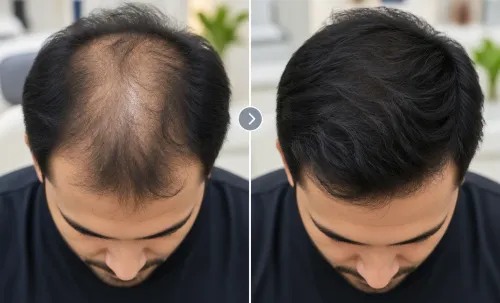

Pattern hair loss can continue gradually for years. In some people, the hairline recedes first. Others notice crown thinning, reduced density across the top of the scalp, or a combination of these changes.
Among the treatments discussed for selected cases is dutasteride mesotherapy treatment, an injectable approach involving a prescription medication.
Because dutasteride is a medical treatment, suitability needs proper clinical assessment.
At Jata Hair Sciences, Dr. Vinay Chouksey evaluates hair-loss history, scalp condition, existing density, treatment goals, and relevant medical factors before recommending a management plan.
Why DHT Matters in Pattern Hair Loss
Dihydrotestosterone, commonly known as DHT, plays an important role in androgenetic hair loss.
In genetically susceptible follicles, DHT can contribute to progressive miniaturisation. Over time, affected hairs may become finer, shorter, and less visible.
Dutasteride acts on enzymes involved in converting testosterone into DHT.
This explains why it may enter treatment discussions for certain forms of patterned hair loss.
What Does Mesotherapy Mean
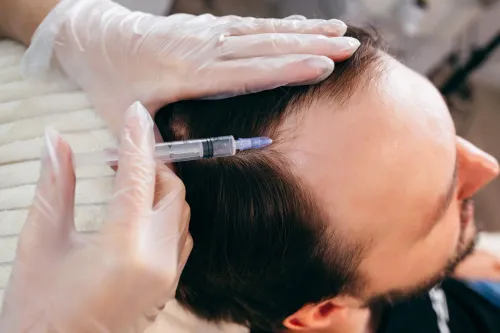
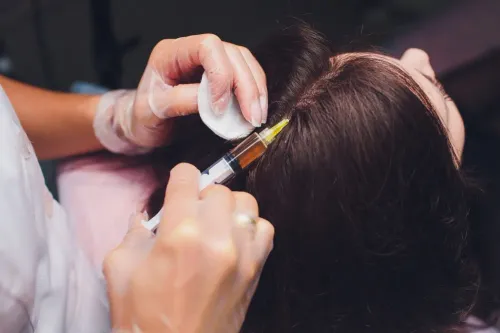
Mesotherapy involves administering treatment through multiple small injections into targeted skin areas.
In dutasteride mesotherapy, the medication is delivered locally according to the treatment protocol used by the doctor.
The method of administration does not make medical evaluation less important. Patients should understand that dutasteride remains a prescription medicine with suitability considerations and potential adverse effects.
Who Needs Careful Assessment
Before considering treatment, patients should share a complete medical history.
The consultation should cover:
- Current medications
- Previous hair-loss treatment
- Existing health conditions
- Allergies
- Duration of hair loss
- Family history
- Previous scalp procedures
The doctor can then decide whether the treatment has a reasonable role in the individual's management plan.
What Dutasteride Mesotherapy Cannot Do
Medication-based treatments and transplantation serve different purposes.
Dutasteride mesotherapy does not physically transplant follicles into bald regions.
When hair loss is advanced and additional coverage is required, the treatment discussion may be different.
This is why patients should understand whether the immediate goal is controlling progression, supporting existing hair, improving visible density, planning future transplantation, or addressing several objectives together.
Questions to Discuss During Consultation
Before treatment, ask:
- What type of hair loss do I have?
- Why is dutasteride being recommended?
- What potential side effects should I know?
- What treatment schedule is being proposed?
- How will response be monitored?
- Could other treatments be needed?
- How long might management continue?
These questions help patients understand the reasoning behind the recommendation.
Dutasteride Mesotherapy Treatment
Patients researching dutasteride mesotherapy treatment in Mumbai may find varying protocols and claims.
A sensible decision should be based on diagnosis, medical suitability, expected benefit, possible risks, and long-term planning rather than promotional promises.
At Jata Hair Sciences, Dr. Vinay Chouksey assesses both existing hair and the broader pattern of progression before planning hair restoration.
This matters particularly in younger patients because current thinning may continue changing over the years.
The best hair-loss strategy is rarely based on one treatment name. It comes from understanding what is happening to the follicles, what can realistically be preserved, and what type of intervention is appropriate at the current stage.
Keywords